Introduction
Blogging in 2026 is no longer just about writing content—it’s about building a strategic SEO system that helps your website rank on Google, attract organic traffic, and grow authority. It is essential to learn the complete Blogging Blueprint. It is essential to learn complete Blogging Blueprint: step by step guide to rank on google.
With increasing competition and evolving algorithms, you need a complete blogging blueprint that combines content creation, SEO optimization, and smart promotion.
In this guide, you’ll learn a step-by-step process used by successful bloggers to rank on Google—even without ads.
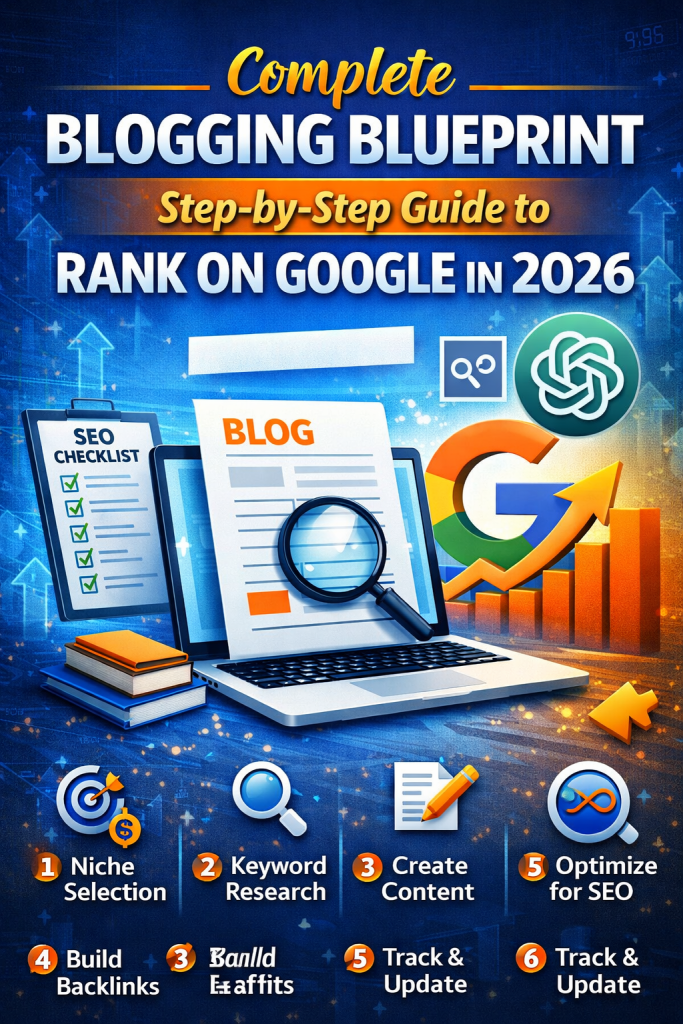
H1: Complete Blogging Blueprint: Step-by-Step Guide to Rank on Google in 2026
H2: Step 1 – Choose a Profitable Niche
H3: Why Niche Selection Matters
Your niche determines your success. A wrong niche leads to low traffic and poor monetization. We should know complete blogging blueprint.
H3: How to Choose the Right Niche
-
- Focus on evergreen topics
-
- Check search demand
-
- Analyze competition
-
- Choose something you enjoy
Examples of Good Niches
-
- SEO and blogging
-
- Online earning
-
- Health and fitness
-
- Personal finance
 Pro Tip: Always validate your niche using keyword research tools.
H2: Step 2 – Keyword Research (The Foundation of SEO)
H3: What is Keyword Research?
Keyword research is finding what people search on Google.
H3: Types of Keywords to Target
-
- Long-tail keywords (easy ranking)
-
- Low competition keywords
-
- Question-based keywords
H3: Best Practices
-
- Use keywords in title, headings, and content
-
- Focus on user intent
-
- Avoid keyword stuffing
Example: “how to rank blog on Google in 2026”
H2: Step 3 – Create High-Quality Content
H3: What Makes Content High Quality?
-
- Original and valuable
-
- Easy to understand
-
- Well-structured
-
- Problem-solving
H3: Content Writing Tips
-
- Use short paragraphs
-
- Write in simple language
-
- Add examples and tips
Remember: Content is king—but optimized content wins.
H2: Step 4 – Optimize On-Page SEO
H3: Important On-Page Elements
-
- Title tag optimization
-
- Meta description
-
- Header tags (H1, H2, H3)
-
- Image alt text
-
- Internal linking
H3: URL Optimization Example
Bad: /post123
Good: /blogging-blueprint-2026
Proper on-page SEO helps Google understand your content better.
H2: Step 5 – Improve Website Technical SEO
H3: Key Technical Factors
-
- Fast loading speed
-
- Mobile-friendly design
-
- SSL certificate (HTTPS)
-
- Clean site structure
H3: Tools to Use
-
- Google Search Console
-
- PageSpeed Insights
-
- GTmetrix
Technical SEO ensures your site is crawlable and indexable.
H2: Step 6 – Internal Linking Strategy
H3: Why Internal Linking is Important
-
- Improves navigation
-
- Helps SEO
-
- Increases page views
H3: Best Practices
-
- Link related blog posts
-
- Use keyword-rich anchor text
-
- Avoid over-linking
Example: Link to On Page SEO Checklist article.
H2: Step 7 – Publish and Index Your Content
H3: What to Do After Publishing
-
- Submit URL in Google Search Console
-
- Share on social media
-
- Check indexing status
H3: Quick Indexing Tips
-
- Use sitemap
-
- Request indexing manually
This helps your content appear faster on Google.
H2: Step 8 – Build High-Quality Backlinks
H3: What are Backlinks?
Links from other websites to your site.
H3: Ways to Build Backlinks
-
- Guest posting
-
- Blog commenting
-
- Directory submission
-
- Social sharing
Quality backlinks increase your website authority.
H2: Step 9 – Promote Your Content
H3: Best Promotion Channels
-
- Facebook groups
-
- Quora
-
- Email marketing
H3: Content Repurposing Ideas
-
- Turn blogs into videos
-
- Create infographics
-
- Share short posts
Promotion brings traffic even before ranking.
H2: Step 10 – Track and Analyze Performance
H3: Key Metrics to Monitor
-
- Organic traffic
-
- Keyword rankings
-
- Bounce rate
-
- Click-through rate
H3: Tools
-
- Google Analytics
-
- Google Search Console
Data helps you improve your strategy.
H2: Step 11 – Update and Optimize Content Regularly and know complete blogging blueprint.
H3: Why Updating Content is Important
-
- Keeps content fresh
-
- Improves ranking
-
- Matches new trends
H3: How to Update
-
- Add new sections
-
- Improve keywords
-
- Update outdated information
Regular updates boost SEO performance.
H2: Common Blogging Mistakes to Avoid
-
- Ignoring keyword research
-
- Writing without structure
-
- Poor SEO optimization
-
- Not promoting content
-
- Slow website speed
H2: Advanced Tips to Rank Faster in 2026
H3: Use Schema Markup
Helps search engines understand your content better.
H3: Optimize for Voice Search
Use conversational keywords.
H3: Focus on E-E-A-T
-
- Experience
-
- Expertise
-
- Authority
-
- Trust
These factors are critical for Google ranking in 2026.
Conclusion
Ranking on Google in 2026 requires more than just writing blog posts—it requires a complete blogging system.
By following this blueprint, you can:
-
- Create high-quality content
-
- Optimize for SEO
-
- Build authority
-
- Drive organic traffic
Success Formula:
Consistency + SEO + Value = Google Ranking