H2. Introduction
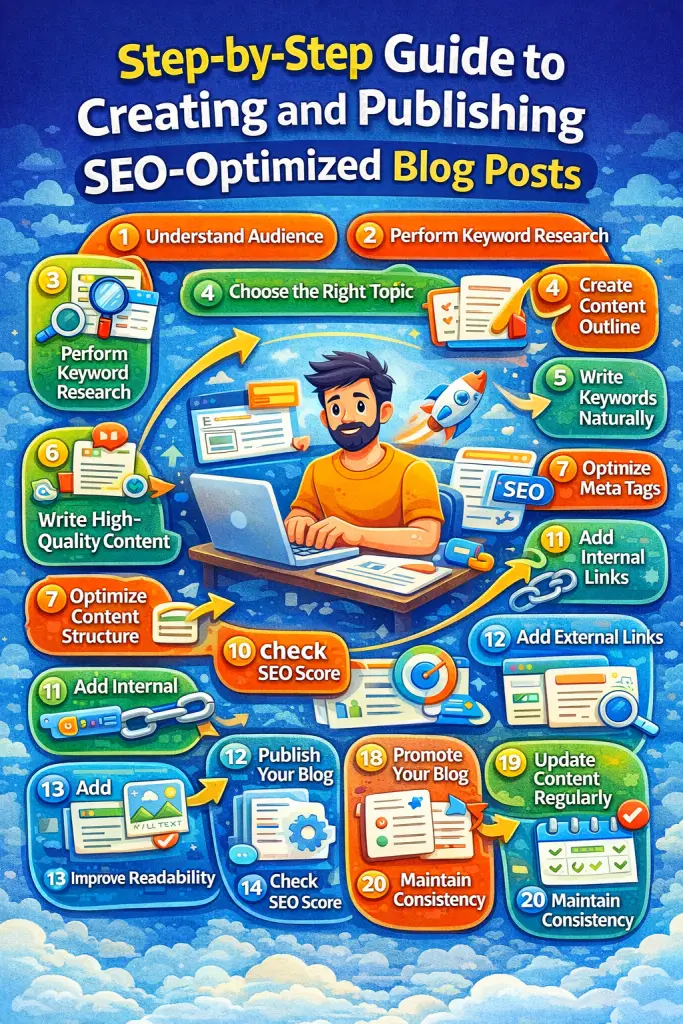
Step-by-step Guide for creating and publishing SEO-optimized blog posts is one of the most effective ways to generate organic traffic, build authority, and grow your website. However, many bloggers struggle because they either skip important steps or don’t follow a structured process.
In 2026, blogging success depends on a combination of strategic planning, keyword research, high-quality content, and proper optimization. If you follow a step-by-step approach, you can significantly improve your chances of ranking on Google and attracting consistent visitors.
This guide will walk you through the complete process of creating and publishing SEO-optimized blog posts, using tools like Google Search Console.
H2. Why SEO-Optimized Blog Posts Matter
SEO-optimized content helps your blog:
-
- Rank higher in search results
-
- Attract organic traffic
-
- Improve user engagement
-
- Build long-term authority
Without proper SEO, even great content may remain invisible.
Step 1: Understand Your Target Audience
Before writing, identify your audience.
Ask:
-
- What are their problems?
-
- What solutions are they looking for?
Understanding your audience ensures your content is relevant and useful.
Step 2: Perform Keyword Research
Keyword research is the foundation of SEO.
Use tools like:
-
- Google Keyword Planner
-
- Google Trends
Tips:
-
- Use long-tail keywords
-
- Focus on low competition keywords
-
- Include semantic keywords
Step 3: Choose the Right Topic
Select a topic based on:
-
- Search demand
-
- Competition
-
- Relevance
Example:
Instead of “SEO tips,” use
“SEO tips for beginners in 2026”
Step 4: Create a Content Outline
An outline helps structure your blog.
Example:
-
- Introduction
-
- Main sections (H2)
-
- Subsections (H3)
-
- Conclusion
Step 5: Write High-Quality Content
Content quality is the most important factor.
Tips:
-
- Write 1500+ words
-
- Provide value
-
- Add examples
Step 6: Optimize Content Structure
Use proper headings.
Structure:
-
- H1: Title
-
- H2: Sections
-
- H3: Subtopics
Step 7: Use Keywords Naturally
Avoid keyword stuffing.
Place keywords in:
-
- Title
-
- Headings
-
- Introduction
-
- Conclusion
Step 8: Write Engaging Headlines
Your title should:
-
- Include keyword
-
- Use power words
-
- Be attractive
Step 9: Optimize Meta Tags
Use Rank Math SEO
Tips:
-
- Title under 60 characters
-
- Description under 160 characters
Step 10: Add Internal Links
Internal links improve SEO.
Benefits:
-
- Better indexing
-
- Improved navigation
Step 11: Add External Links
External links increase credibility.
Link to trusted sources.
Step 12: Optimize Images


4
Tips:
-
- Add ALT text
-
- Compress images
-
- Use relevant visuals
Step 13: Improve Readability
Readable content keeps users engaged.
Tips:
-
- Use short paragraphs
-
- Use bullet points
-
- Avoid complex words
Step 14: Add FAQ Section
Q1: How to create SEO blog posts?
Use keywords, structure, and high-quality content.
Q2: What is ideal blog length?
1500–2000 words.
Step 15: Check SEO Score
Use tools like:
-
- Rank Math SEO
Fix errors before publishing.
Step 16: Publish Your Blog Post
After optimization:
-
- Review content
-
- Check formatting
-
- Click publish
Step 17: Promote Your Blog
Publishing is not enough.
Share on:
-
- Quora
-
- Medium
Step 18: Update Content Regularly
Fresh content ranks better.
Update:
-
- Old posts
-
- Add new information
Step 19: Track Performance
Use tools like:
-
- Google Analytics
-
- Google Search Console
Step 20: Maintain Consistency
Consistency is key.
Recommended:
-
- 2–3 posts per week
H2. Common Mistakes to Avoid
-
- Thin content
-
- Keyword stuffing
-
- Poor structure
-
- No internal links
H2. Advanced Tips
1. Use Content Clustering
Create related posts.
2. Optimize for Featured Snippets
Answer questions clearly.
3. Add Table of Contents
Improves SEO score.
H2. Checklist Before Publishing
-
- Keyword in title
-
- Meta description added
-
- Internal links added
-
- External links added
-
- Images optimized
-
- Content length 1500+ words
H3. Conclusion
Creating and publishing SEO-optimized blog posts requires a structured approach. By following this step-by-step guide, you can improve your rankings, attract organic traffic, and grow your blog successfully.
Start applying these strategies today and achieve better results.